
Tata Motors confirms Sierra EV, new Punch EV and premium Avinya series launch in 2026 as it scales EV sales, charging infrastructure and local battery production in India.
Tata Motors Gears Up for Major EV Push in 2026 with Sierra EV, New Punch EV and Avinya Series
Tata Motors is preparing to go all in on electric mobility as it enters the next phase of its EV journey. The company has officially confirmed that calendar year 2026 (CY2026) will be a major turning point, with three brand-new electric vehicles lined up for launch, along with large-scale investments in charging infrastructure, localisation and long-term ecosystem development.
This announcement comes at a time when Tata Motors continues to strengthen its leadership in India’s electric vehicle space. In just five years, the brand has crossed 2.5 lakh cumulative EV sales, making it the clear market leader. The Nexon EV has played a crucial role in this success, becoming the first electric vehicle in India to cross 1 lakh unit sales.
With demand rising and customer expectations evolving, Tata Motors is now preparing for its most aggressive EV expansion yet.
CY2026: A Landmark Year for Tata Motors’ EV Strategy
The most immediate phase of Tata Motors’ electric vehicle roadmap begins in CY2026, when the company will introduce two highly anticipated models — the production-ready Sierra EV and a new-generation Punch EV.
The return of the Sierra nameplate has already generated strong interest, and Tata is confident that its electric version will build on the positive response received by the ICE-powered Sierra. The Sierra EV will be positioned as a lifestyle-focused electric SUV, aimed at buyers looking for a premium yet practical EV.
According to Tata, the Sierra EV will be offered with two battery pack options and is expected to deliver a claimed range of over 500 km on a single charge, making it one of the longest-range electric SUVs in its segment.
Also Read: OnePlus 13s Truth Revealed: Should You Buy This Compact Flagship in 2025?
New Punch EV to Build on Strong Market Success
Alongside the Sierra EV, Tata Motors will launch a new iteration of the Punch EV in 2026. The Punch has already established itself as one of India’s most successful compact SUVs, and its electric version has further strengthened Tata’s presence in the mass-market EV segment.
The upcoming Punch EV is expected to feature updated styling, improved range and enhanced features, ensuring it remains competitive as new rivals enter the market. With its compact size, high safety standards and urban-friendly design, the Punch EV will continue to target first-time EV buyers and city users.
Avinya Series to Sit at the Top of Tata’s EV Portfolio
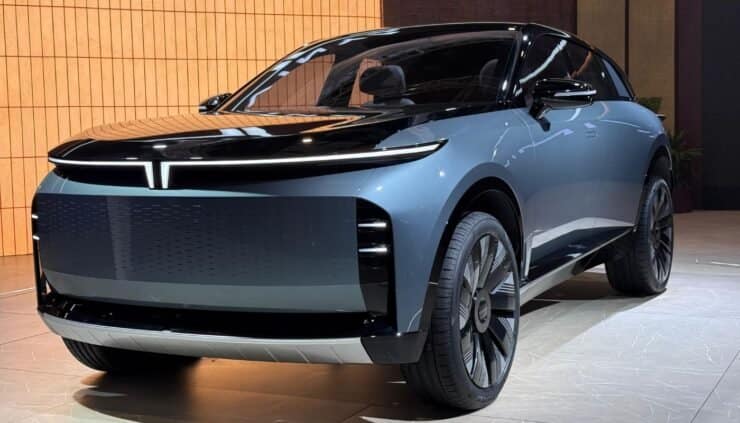
Towards the end of CY2026, Tata Motors will introduce the Avinya series, a new family of premium electric vehicles that will sit at the top of its EV lineup. The Avinya range has been showcased multiple times in concept form, and the production versions will reflect Tata’s vision for next-generation electric mobility.
The Avinya models will focus on advanced design, new-age platforms, high efficiency and sustainable materials, catering to buyers looking for premium electric vehicles with cutting-edge technology. These models are expected to play a key role in Tata’s long-term EV growth strategy.
Five All-New Electric Nameplates by 2030
Looking beyond 2026, Tata Motors has confirmed that its electric vehicle lineup will expand significantly by the end of the decade. By FY2030, the brand aims to have at least five all-new electric nameplates on sale, including the Sierra EV and Avinya families.
In addition to new launches, Tata will continue to introduce facelifts, feature upgrades and range improvements across its existing EV models to keep them competitive in a rapidly evolving market.
Massive Expansion Planned for EV Charging Infrastructure
Vehicle launches will be supported by a major expansion of charging infrastructure. Tata Motors has acknowledged that charging speed, reliability and accessibility are now critical decision-making factors for EV customers.
By CY2027, Tata plans to have around 4 lakh charging points across India, including more than 30,000 public fast chargers, developed through the Tata EV Open Collaboration framework.
The company’s long-term goal is even more ambitious. By 2030, Tata Motors aims to build an EV charging ecosystem with one million charging points nationwide, including at least 1 lakh public chargers. This would make Tata’s network one of the densest and most accessible EV charging infrastructures in the country.
Focus on EV Ownership Experience and After-Sales Support
Tata Motors is also investing heavily in improving the overall EV ownership experience. Plans include the expansion of dedicated EV bays, specialised battery repair centres and trained service personnel across the country.
For second owners, Tata will introduce battery health checks and refurbishment solutions, helping improve transparency and resale confidence in the used EV market. End-of-life batteries will be repurposed for energy storage applications, supporting Tata’s push toward a circular economy.
Also Read: 🌿 10 Life-Changing AI Products for Smart & Sustainable Everyday Living
Local Battery Cell Manufacturing to Strengthen EV Ecosystem
One of the most significant steps in Tata Motors’ EV roadmap is localisation. The company has confirmed that high-voltage battery cells for its electric vehicles will eventually be sourced locally from Agratas’ upcoming gigafactory in Sanand.
Local battery production will help reduce costs, improve supply chain resilience and support India’s broader electric mobility goals. This move is expected to play a key role in making EVs more affordable in the long run.
Tata’s EV Vision for the Next Decade
With strong sales momentum, multiple new launches planned and a rapidly expanding charging ecosystem, Tata Motors is positioning itself for long-term leadership in India’s electric vehicle market. The combination of new EV models, infrastructure growth and localisation reflects a holistic approach to electric mobility.
As customer expectations continue to evolve, Tata’s focus on range, charging speed, reliability and ownership experience will be crucial in maintaining its dominance.
Conclusion
Tata Motors’ aggressive EV roadmap clearly signals its intent to stay ahead in India’s electric vehicle transition. With the Sierra EV, new Punch EV and Avinya series set to arrive in CY2026, followed by multiple new nameplates by 2030, the brand is laying the foundation for sustained growth.
Backed by one of the country’s most ambitious charging infrastructure plans and local battery manufacturing, Tata Motors is set to play a defining role in shaping India’s electric mobility future.
Also Read: Big Offer: Tata Motors Launches Special Year-End EMI Schemes from Rs. 4,999